
What is Structural Health Monitoring (SHM)?
Structural Health Monitoring comprises the use of permanently installed sensors or instrumentation, combined with data analysis, to generate data that permits the continuous monitoring of structures such as bridges, dams, tunnels and buildings. This allows engineers to make timely, informed decisions regarding the monitored structure’s integrity, detect structural defects, predict or estimate a structure’s remaining life span and maximise the opportunity to operate the structure safely.

The majority of SHM systems utilize distributed, permanently installed sensors, installed at strategic structural regions and applies diagnotic algorhythms to extract meaningful information. SHM refers to the broad concept of assessing ongoing, in-service performance of structures, using a variety of different sensor technologies, inspection techniques, data management and diagnostic algorithms.
Structural Health Monitoring is used to maintain infrastructure, extend its service life and detect and forecast faults.
Sixense SHM
We monitor the structure and its environment (usage, weather, etc…) simultaneously by integrating a varied range of measurements, with the majority of data being gathered automatically, including satellite measurements.
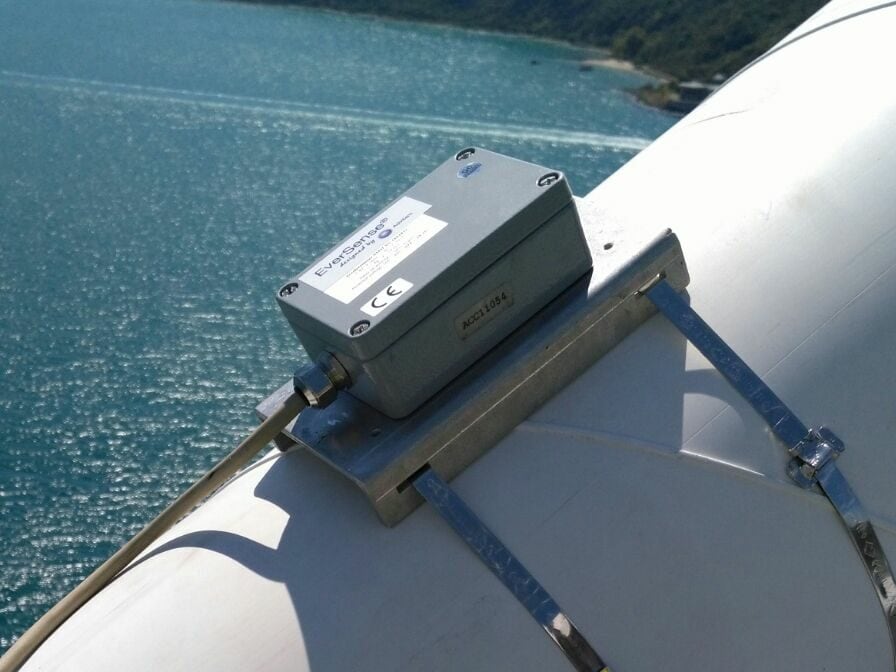
Sixense’s custom software enables data to be displayed as smart graphics and generate alerts, providing a powerful tool which can be used in conjunction with spot check inspections to enable relevant structural data analysis. Data is processed to provide relevant indicators that operators can reliably apply to optimise the operation and maintenance of their infrastructure.
Our experience allows us to conduct structural health monitoring under challenging conditions (in confined spaces, working at height, over water etc…) by offering durable instrumentation for a broad range of applications, including extreme environments, offshore structures and potentially explosive ATEX zones.