
Sixense Limited delivers comprehensive structural monitoring services to support the safety, performance, and longevity of buildings, bridges, tunnels, rail assets, and other critical structures.
Structural monitoring is essential where construction activity, environmental influences, or natural ageing may affect the integrity of an asset. Sixense works across all project phases—from design and construction through to operation and maintenance—ensuring that structural behaviour is clearly understood and that any emerging risks are identified early. By combining technical experience with advanced instrumentation and digital data platforms, Sixense provides clients with the confidence that their structures are being observed accurately and continuously.
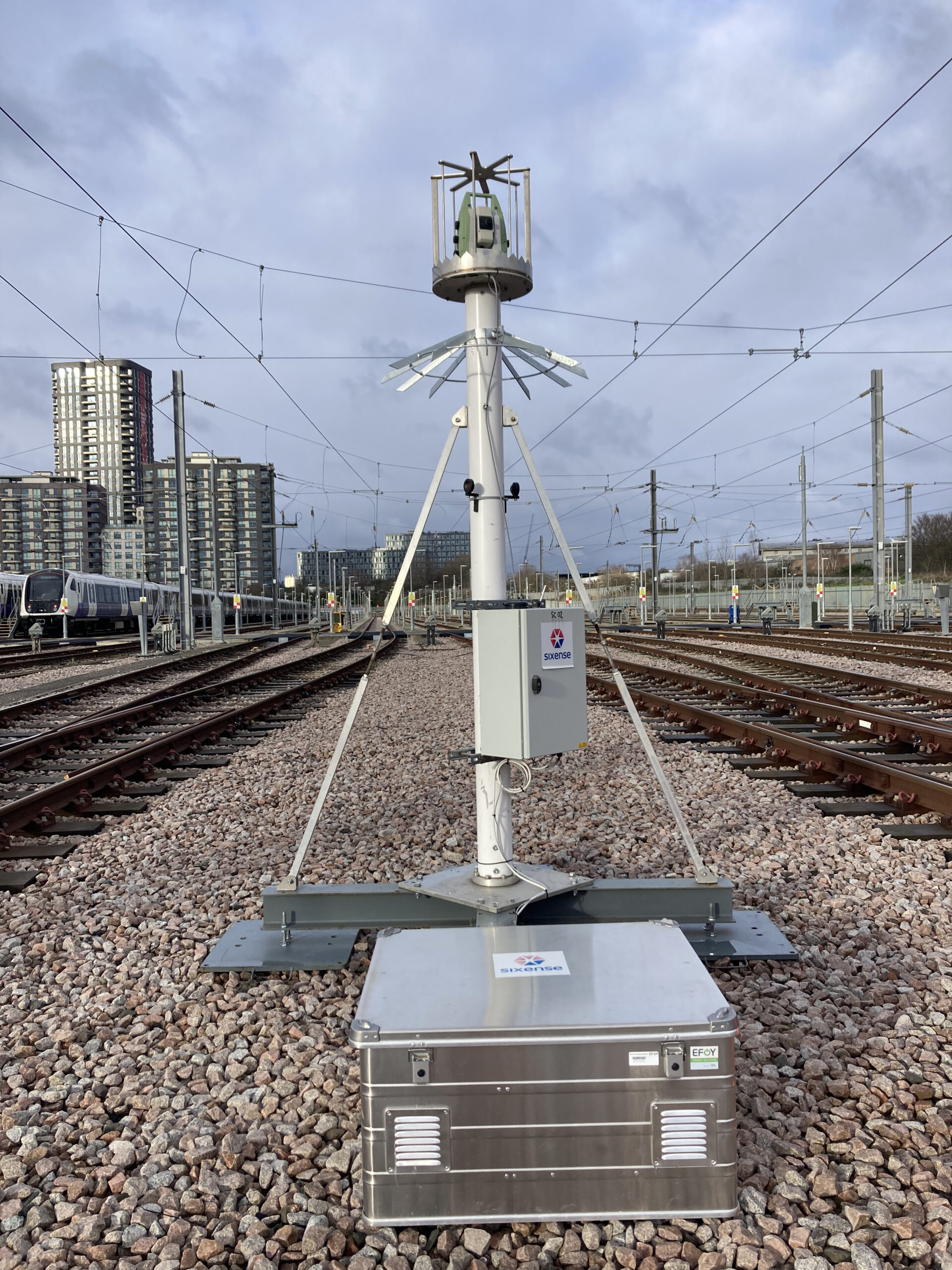
A core part of Sixense’s structural monitoring capability is the design and installation of tailored instrumentation networks. Each monitoring scheme is engineered to suit the specific geometry, materials, loading conditions, and risk profile of the asset in question. Whether monitoring a bridge under live traffic, a high-rise during adjacent an excavation, or a heritage building undergoing refurbishment, Sixense ensures that sensors are deployed in optimal configurations to capture the most relevant and reliable data.
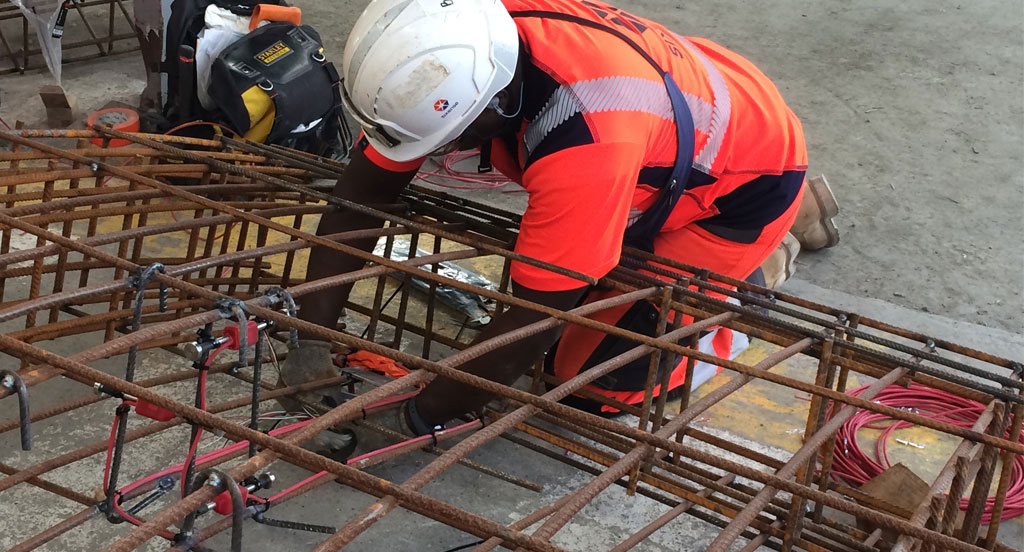
Sixense also provides manual and semi-automated monitoring solutions for assets where access, budget, or risk considerations require more focused measurement. This includes regular surveys of structural movement using precise levelling, total station observations, and manual readings of tell-tales and crack monitors. These techniques remain essential for validating automated systems and verifying structural condition at key project milestones. Skilled technicians and surveyors apply rigorous quality control procedures to ensure that measurements are consistent and defensible, enabling engineers and asset owners to make informed decisions.
Automated structural monitoring forms a significant part of Sixense’s service offering, providing continuous, real-time observation of structural performance. With the use of remote data loggers, telemetry systems, and IoT-connected sensors, data can be collected around the clock and transmitted securely to cloud-based platforms. This approach allows for immediate notification of threshold exceedances and the early detection of abnormal trends, enabling timely intervention. On complex or high-risk projects, automated monitoring can be an invaluable tool to safeguard workers, infrastructure, and the public.
Sensor & Instrumentation solutions
Sixense provide structural monitoring services that include (but are not limited to) the following sensor and instrumentation solutions:
- Automatic Total Stations (CYCLOPS)
- Tiltmeters and Beam Sensors
- Surface Mounted and Embedded Strain Gauges
- Load Cells
- Crack Width and Crack Propagation monitoring
- Vertical and Horizontal Shape Acceleration Arrays (SAA)
- GNSS Sensors
- Hydraulic Settlement Cells
- Earth Pressure Cells
- Fibre Optics…
All monitoring data is centralised and visualised through Sixense’s digital platform, Beyond Monitoring. This enables stakeholders to view live dashboards, analyse trends, download historical records, and generate custom reports. Clear and intuitive visualisation ensures that engineers, contractors, and asset owners can interpret results quickly and confidently, without the need to navigate raw datasets. Alert systems can be configured so that key personnel receive instant notifications via email or SMS when thresholds are crossed, supporting rapid and coordinated response where required.
Ultimately, Sixense’s structural monitoring services help reduce uncertainty, control risk, and optimise the lifecycle performance of critical infrastructure. By understanding how structures behave under changing conditions, clients can refine construction processes, prevent damage before it occurs, and extend the safe operational life of their assets.
With extensive experience across transport, building, energy, industrial, and heritage sectors, Sixense provides dependable monitoring strategies backed by technical expertise, robust data management, and a commitment to engineering excellence.
