Skip to content Transforming your infrastructure into living assets

Conventional Geophysics

Conventional solutions for subsurface strata surveys

Conventional geophysical survey services

Sixense offers conventional geophysical survey services as part of its wider engineering and ground investigation capabilities..

These services focus on non-invasive techniques to “see” beneath the ground surface, using methods such as seismic, electrical, or electromagnetic measurements to build a picture of subsurface conditions. By collecting and interpreting geophysical data, Sixense helps clients gain a continuous and comprehensive understanding of soil and rock properties without the need for extensive excavation or drilling.
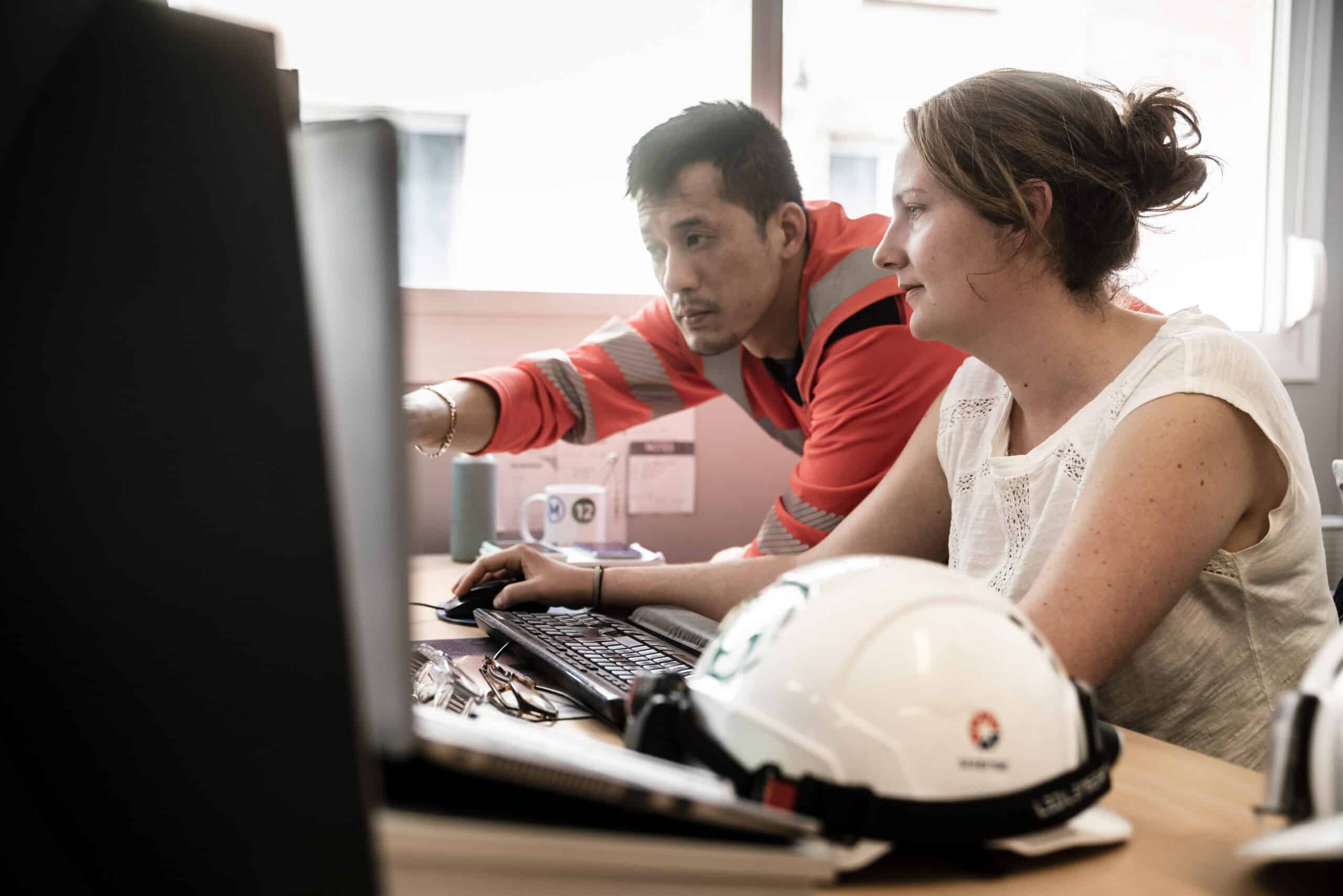
 

HS2 - C2 C3 - Geoscope Data Manager
 

One of the primary uses of Sixense’s conventional geophysical surveys is subsoil characterisation and modelling. These surveys allow engineers to visualise geological layers, identify variations in soil composition, and refine ground models in two or three dimensions. This is particularly valuable in complex environments—such as urban areas or mountainous terrain – where traditional investigation methods may be limited. By enhancing geotechnical models with continuous data, these surveys support better-informed design decisions for foundations, tunnels, and other infrastructure projects.

Another key application is risk reduction and safety assurance in construction projects. Conventional geophysics can detect underground hazards such as cavities, voids, faults, or buried objects (e.g., old foundations or tanks) before construction begins. Identifying these features early helps prevent structural failures, ground collapse, or costly delays. Sixense’s services are therefore widely used in transport infrastructure (roads, rail, tunnels), urban development, and large-scale engineering works where understanding subsurface risks is critical to protecting both people and assets.

Sixense’s surveys are also used for monitoring and diagnosing ground and infrastructure conditions over time. For example, geophysical methods can assess the integrity of earthworks, evaluate ground improvement techniques, or measure dynamic soil parameters such as stiffness and seismic velocity. They can also detect issues like water leakage or track underground fluid movement. Because the techniques are non-invasive and repeatable, they are well suited for ongoing monitoring throughout the lifecycle of infrastructure—from construction through to operation and maintenance.

Finally, conventional geophysical surveys support environmental and resource-related investigations, including hydro geophysics and water management. These methods can locate aquifers, map groundwater flow, and improve understanding of subsurface geology for resource exploitation or environmental protection. More broadly, Sixense uses these surveys to provide fast, economical, and eco-friendly site reconnaissance, enabling clients to optimise project design, minimise environmental impact, and make informed decisions based on reliable subsurface data.

Our conventional geophysics activities

More than 25 years of experience to support and facilitate your projects

Our multidisciplinary team offers more than 20 methods and technologies, backed up by sound advice to identify the best-possible solution to your environmental, geotechnical and structural issues.

Our experts hold the largest number of AGAP quality approvals in the profession (www.agapqualite.org), providing our clients with valuable assurance regarding the sophistication and effectiveness of the methods we use and the quality and reliability of the services we provide.

An international team

Throughout our history, our team has been able to capitalise on a large volume of positive feedback from clients and projects around the world.

Our Sixense branches in more than 20 countries provide you with expert support worldwide.

What sets us apart?

The size of our team as well as our international locations offer a speed of intervention and execution that is unique on the market.

We start with your problems and propose the appropriate methodology.

Thanks to the diversity of our expertise, our specialists will be able to provide you with the elements you need to understand your subsoil and the risks associated with it.

Conventional geophysics applications

  • Cavity (void) detection
    Natural or anthropogenic cavity (void) detection by the most suitable geophysical method from the surface and in borehole.
  • Ground dynamic parameters
    In borehole or Surface seismic measurement to obtain Vs30, VS, Vp and the dynamic elastic modulae of the subsurface such as Poisson’s ratio, Young’s modulus & Shear Modulus.
  • Geological model
    Application of  2D or 3D geophysical methods to enrich an existing ground model (constructed by geotechnical parameters) with continuous data taking into account the heterogeneities of the subsurface.
  • Water leakage detection
    Implementation of geophysical tracing solutions to detect underground water circulation and water leakage.
  • Hydrogeophysics
    Upgrading of structural geology model (fault, position of stratigraphic layers, etc.) using geophysical methods (2D/3D) to detect and to optimise subsurface aquifers exploitation.
  • Diagnosis of earthworks (excavation and filling)
    Application of geophysical imaging adapted to the problem (high performing, monitoring, etc.) to assess the geometry of the structure and its current condition.
  • Detection of Buried objects (structures & archaeological mapping)
    In borehole or surface geophysical methods to detect buried structures, foundations, tanks, etc.
  • Ground improvement
    Geophysical measurement before and after injection process for a qualitative and quantitative evaluation of its effect.

The benefits of using Sixense

Non-invasive, eco-friendly reconnaissance

Continuity of geological information to complement survey data

Economical, rapid deployment solutions that deliver reliability and reproducibility for optimal monitoring