Client:
Arup Consulting Engineers
Arup Consulting Engineers link opens in a new tab
https://www.arup.com/

The Wobbly Bridge
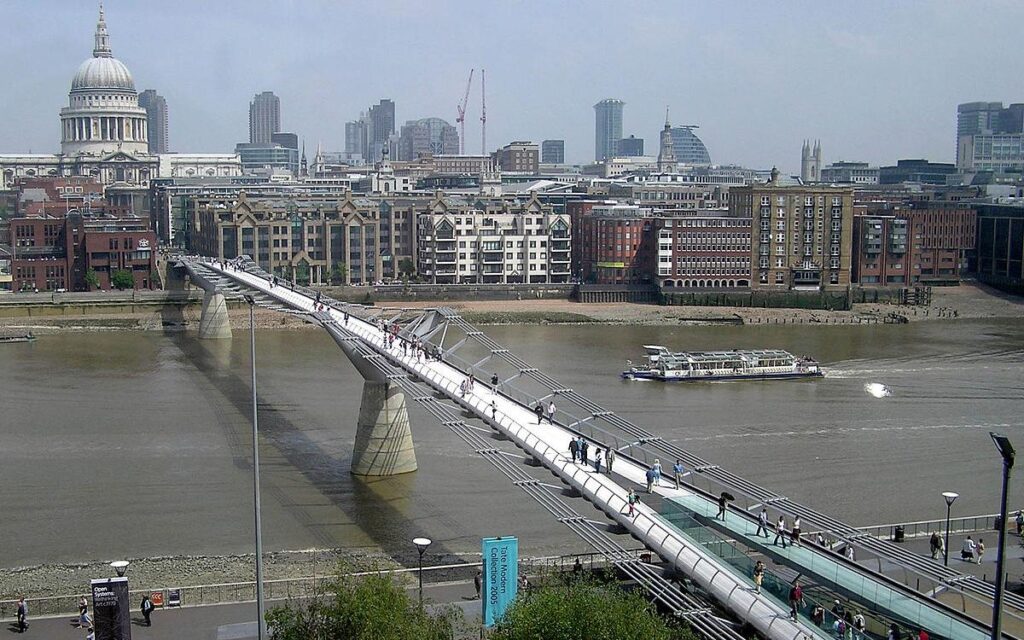
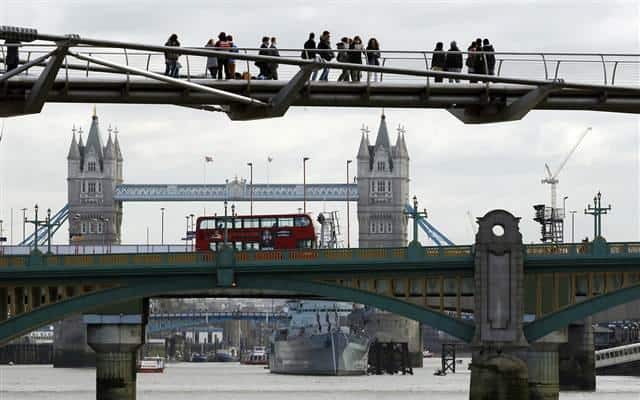
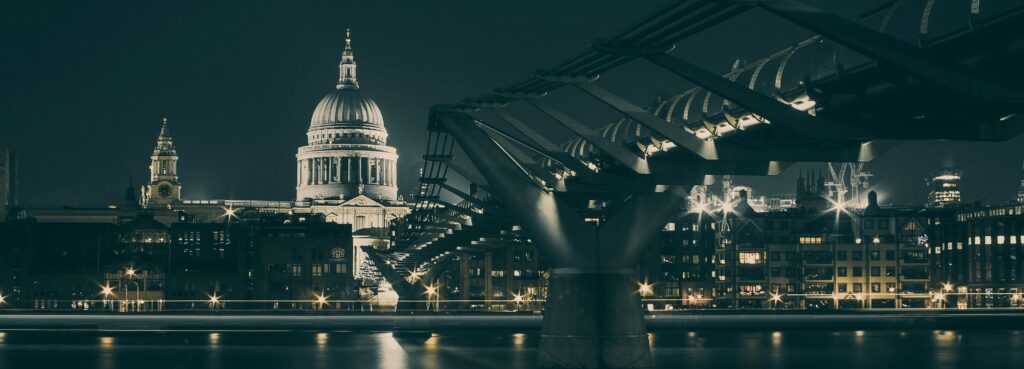
The Millennium Bridge is a steel pedestrian suspension bridge crossing the River Thames, linking St Paul’s Cathedral on the north bank with the Tate Modern and the South Bank arts district. Designed by Foster + Partners with engineers Arup and sculptor Sir Anthony Caro, the bridge was conceived as a slender, low‑profile crossing that would preserve uninterrupted views along the river. Opened in June 2000 as part of London’s millennium celebrations, it immediately became an architectural landmark, praised for its minimalist form and its unique “blade of light” appearance across the Thames.
However, on its opening day the bridge famously developed an unexpected lateral movement when thousands of pedestrians crossed it at once, quickly earning the nickname “the Wobbly Bridge.”
The motion was later identified as being caused by a phenomenon known as synchronous lateral excitation, where pedestrians subconsciously adjusted their walking rhythm to the bridge’s slight side‑to‑side movement, amplifying the oscillations.
Although there was no structural danger, the bridge was closed just two days after opening.
Extensive testing and analysis followed, leading to the installation of dampers that controlled both horizontal and vertical movement. The bridge reopened successfully in 2002, and today it stands as both a popular river crossing and a globally recognised case study in structural dynamics and pedestrian‑structure interaction.
‘Wobble’ measurement
Sixense (then Sol Data) were engaged to carry out specialist structural and dynamic monitoring following the unexpected lateral movements—later known as the bridge’s famous “wobble”—observed on opening day.
Sixense deployed high‑precision movement and vibration monitoring instrumentation along the bridge deck and supporting structure to accurately measure horizontal displacements, vibration frequencies and accelerations as crowds crossed the span. This monitoring work was critical in transforming qualitative observations of movement into robust quantitative datasets that engineers could analyse and model.
Analysing bridge movements
SIXENSE were approached to undertake structural monitoring and measure the tilt of the mid-section of the bridge decking in two separate scenarios:
- Bridge unloaded
- Bridge loaded with pedestrians (120 people, standing in an area 120 m long x 2 m wide)
Our engineer had a time frame of only 20 minutes to record readings and register the final ‘load applied’ results. Tilt was measured at 6 different bridge sections, firstly, whilst the structure was unloaded, and then after the pedestrians had been placed in the standing zones.
The two readings from each cross section indicated any lateral changes in tilt to the bridge deck. The results were immediately entered into a spread sheet on site and the overall tilts were computed immediately. The data was presented to the client in digital format on site and then faxed as an official copy the following day.
The Wobble Fix
The data captured by Sixense played a key role in helping the project team understand how pedestrian footfall was interacting with the bridge’s dynamic behaviour. By mapping the amplitude and frequency of lateral movements under different loading conditions, the monitoring programme provided empirical evidence to validate analytical models and inform the development of effective mitigation measures.
This ultimately led to the design and installation of a system of viscous dampers and tuned mass dampers, which successfully controlled the oscillations and allowed the bridge to reopen safely in 2002.
This was SIXENSE’S (Sol Data’s) very first contract in the UK (!)
To find out more about the Millennium Bridge please click here.
Images of the project
Electrolevel beams
Minute measurement window
Similar projects